
Paralysis is often perceived as a life-altering condition with limited recovery possibilities. For many patients and families, it brings uncertainty, dependency, and emotional distress. However, with advancements in paralysis treatment and rehabilitation sciences, recovery is no longer just a distant hope—it is an achievable goal when approached with the right expertise and structured care.
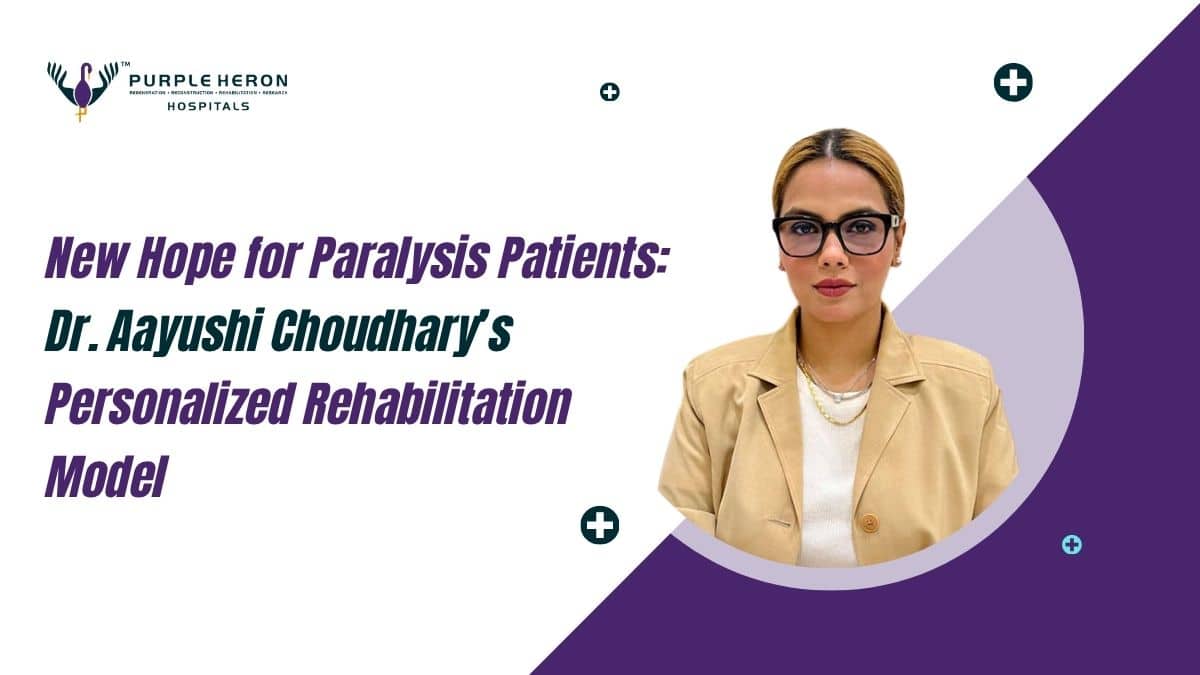
At the forefront of this transformation is Dr. Aayushi Choudhary, a leading Pain Musculoskeletal Medicine & Rehabilitation Specialist, who is redefining how paralysis recovery is approached in India through a personalized, patient-centric rehabilitation model.
Understanding Paralysis: Beyond the Condition
Paralysis refers to the loss of muscle function in part of the body, often caused by neurological damage such as:
- Stroke
- Spinal cord injury
- Traumatic brain injury
- Nerve disorders
Depending on severity, it can manifest as hemiplegia (one side of the body), paraplegia (lower body), or quadriplegia (full-body involvement).
Traditionally, treatment has focused on immediate stabilization and survival. However, modern medicine emphasizes functional recovery, independence, and quality of life—an area where neuro rehabilitation plays a critical role.
The Shift Toward Rehabilitation-Based Recovery
In recent years, India has seen a growing awareness of structured rehabilitation. The concept of rehabilitation as the “fourth pillar of medical science” is gaining recognition, particularly in managing long-term disabilities like paralysis. This shift reflects a deeper understanding: recovery from paralysis is not a one-time treatment but a continuous, process-driven journey.Introducing Dr. Aayushi Choudhary: A Visionary in Rehabilitation Medicine
Dr. Aayushi Choudhary, Director & Founder, is an MD in Physical Medicine and Rehabilitation (MDPMR) with over a decade of experience in medicine. She is a specialist in Pain, Musculoskeletal Medicine, and Rehabilitation.
Her credentials include:
- MBBS, MDPMR (Pain, Musculoskeletal Medicine & Rehabilitation Specialist)
- Inventor & Certified Researcher
- Recipient of the President’s Award 2022 (Lisbon, Portugal)
However, beyond qualifications, what truly distinguishes Dr. Aayushi is her forward-thinking approach to healthcare.
She strongly advocates that rehabilitation should not be an afterthought but an integrated, central component of treatment, focusing not just on survival but on helping patients achieve their highest functional potential.
The Problem with the Traditional Medical Approach
One of the biggest challenges in paralysis treatment in India is the fragmented healthcare system.
Patients often move between multiple departments:
- Neurology
- Orthopedics
- Physiotherapy
- Pain management
This lack of integration leads to:
- Delayed recovery
- Inconsistent treatment plans
- Suboptimal outcomes
Dr. Aayushi highlights that this “referral-based system” creates gaps in care, preventing patients from receiving holistic and continuous rehabilitation.
The Personalized Rehabilitation Model: A Game Changer
Dr. Aayushi Choudhary’s approach is built on a structured, protocol-driven rehabilitation model that addresses the root cause of disability while focusing on long-term functional recovery.
1. Comprehensive Patient Assessment
Every patient undergoes a detailed evaluation that includes:
- Medical history
- Neurological assessment
- Functional limitations
- Lifestyle factors
This ensures that treatment is tailored, not generalized.
2. Customized Treatment Planning
Unlike conventional approaches, Dr. Aayushi Choudhary designs individualized rehabilitation plans based on:
- Type and severity of paralysis
- Patient’s age and health condition
- Recovery goals
This personalized strategy significantly improves outcomes and recovery speed.
3. Multidisciplinary Rehabilitation Approach
Her model integrates multiple therapies, including:
- Physiotherapy
- Occupational therapy
- Pain management
- Neuro-rehabilitation techniques
This ensures a comprehensive recovery pathway rather than isolated treatment methods.
4. Focus on Root Cause Treatment
Instead of addressing symptoms alone, the treatment targets:
- Neurological recovery
- Muscle reactivation
- Functional independence
This approach enhances the long-term sustainability of results.
5. Continuous Monitoring & Feedback
Recovery from paralysis is dynamic. Dr. Aayushi incorporates:
- Regular progress tracking
- Feedback-based adjustments
- Long-term rehabilitation planning
This ensures that patients remain on the optimal recovery trajectory.
Purple Heron Hospital: A New Era in Rehabilitation Healthcare
To bring her vision to life, Dr. Aayushi Choudhary co-founded Purple Heron Hospital along with Dr. Nitesh Lamoria.
This institution represents a first-of-its-kind integrated rehabilitation model in India, offering:
- Structured treatment protocols
- Holistic patient care
- Lifestyle-integrated recovery plans
At Purple Heron Hospital, the focus is not just on treating disability but on enabling individuals to thrive beyond limitations.
Why Patients Are Choosing This Approach
- Holistic Care: Treatment is aligned with the patient’s physical, emotional, and lifestyle needs.
- Structured Protocols: A systematic approach ensures consistency and measurable outcomes.
- Patient-Centric Philosophy: Every decision revolves around improving the patient’s quality of life.
- Focus on Independence: The ultimate goal is to help patients regain mobility, confidence, and autonomy.
The Importance of Early Rehabilitation
One of the most critical factors in paralysis recovery is timely intervention.
Starting rehabilitation early can:
- Prevent muscle atrophy
- Improve neural recovery
- Enhance mobility outcomes
Dr. Aayushi emphasizes that “the best time to start rehabilitation is always NOW.”
This proactive approach significantly increases the chances of functional recovery.
Redefining Recovery: From Survival to Thriving
The traditional goal of treatment was to help patients “manage” their condition. However, Dr. Aayushi’s philosophy goes beyond that.
Her approach aims to:
- Restore functional independence
- Improve overall quality of life
- Help patients reintegrate into society
This shift from survival to optimal functionality is what makes her model truly transformative.
Who Can Benefit from This Model?
The personalized rehabilitation approach is suitable for:
- Stroke patients
- Spinal cord injury cases
- Post-surgical recovery patients
- Individuals with neurological disorders
- Elderly patients with mobility challenges
It is designed for people across all age groups—from infants to senior citizens—making it a comprehensive solution for rehabilitation care.
The Future of Paralysis Treatment in India
India is at a crucial stage in the evolution of rehabilitation medicine. With increasing awareness and advancements, the focus is shifting toward:
- Integrated healthcare systems
- Evidence-based rehabilitation protocols
- Patient-centric treatment models
Experts like Dr. Aayushi Choudhary are leading this transformation, setting new benchmarks in paralysis treatment and recovery.
Final Thoughts: A New Beginning for Patients
Paralysis is no longer the end of independence—it is the beginning of a structured recovery journey.
With the right guidance, advanced rehabilitation, and a personalized approach, patients can regain mobility, confidence, and control over their lives.
If you are searching for the best paralysis treatment in India, consult a paralysis specialist who prioritizes holistic, patient-focused recovery can make all the difference.