
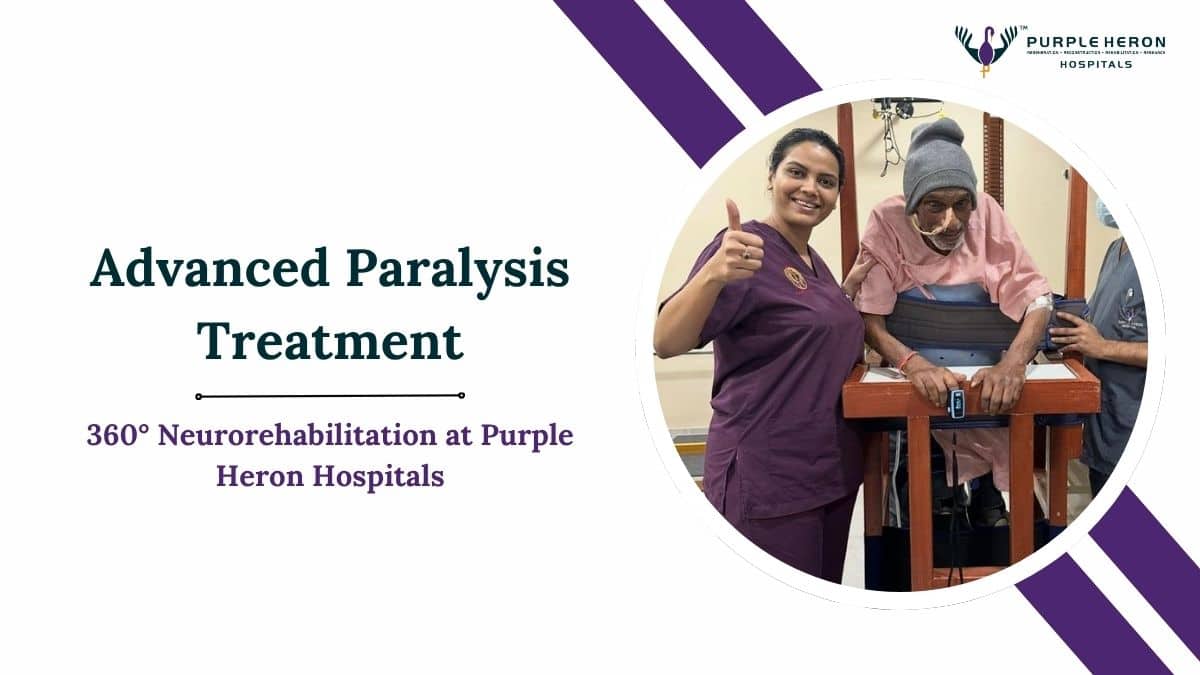
Paralysis is more than just loss of movement—it affects independence, confidence, and quality of life. Whether caused by stroke, spinal cord injury, or nerve damage, effective recovery requires more than basic physiotherapy.
At Purple Heron Hospitals, we follow a comprehensive 360° neurorehabilitation approach under the expert guidance of Dr. Aayushi Choudhary—focused not just on movement, but on restoring function, dignity, and independence.
Understanding Paralysis: Spastic vs Flaccid
Effective treatment begins with identifying the type of paralysis:
1. Spastic Paralysis (Upper Motor Neuron)
- Common in stroke and brain injuries
- Symptoms:
- Muscle stiffness
- Tight posture
- Difficulty in walking and performing daily activities
2. Flaccid Paralysis (Lower Motor Neuron)
- Seen in nerve injuries and spinal conditions
- Symptoms:
- Weak, floppy muscles
- Joint instability
- Reduced control
At Purple Heron Hospitals, diagnosis directly shapes a personalized treatment plan.
Read our full blog on paralysis treatment & neurorehabilitation guide to explore detailed treatment and recovery strategies.
Our Approach: Functional Recovery, Not Just Movement
We don’t just ask “Can the patient move?”
We focus on:
- Independent walking
- Toileting & hygiene
- Bladder & bowel control
- Return to daily life & work
1. Advanced Spasticity Management
For patients with stiffness and tight muscles:
- Ultrasound-guided Botulinum injections
- Muscle relaxation for better mobility
- Improved posture and limb function
Bladder Control Support:
- Intravesical therapies
- Improved bladder capacity
- Reduced leakage
2. Orthotic & Mobility Support
Correct orthotics can transform recovery:
- AFO / KAFO for walking support
- Upper limb splints for hand function
- Joint alignment correction
Helps patients move from dependence to independence
Bladder & Bowel Rehabilitation
Often ignored—but critical for quality of life:
Bladder Care:
- Timed voiding
- Bladder training programs
- Catheterization support
Bowel Care:
- Structured routines
- Diet planning
- Regular evacuation protocols
4. Gait Training & Mobility Engineering
Walking after paralysis requires structured training:
- Post-stroke gait correction
- Assistive device optimization
- Energy-efficient walking techniques
Goal: Safe, sustainable, and fatigue-free mobility
5. Daily Life (ADL) Rehabilitation
We help patients regain independence in:
- Dressing
- Bathing
- Eating
- Workplace adjustments
Because recovery means returning to life—not just movement.
6. Nutrition for Faster Recovery
Healing needs the right fuel:
- High-protein diet
- Anti-inflammatory nutrition
- Muscle preservation strategies
To understand paralysis types and recovery approaches in detail, read the expert guide by Dr. Aayushi Choudhary.
Specialized Care for Flaccid Paralysis
Flaccid paralysis requires a different strategy:
- Strong supportive braces
- Joint stabilization
- Assisted rehabilitation programs
Important Risk Awareness:
- Autonomic Dysreflexia (in spinal injuries)
- Caregiver education for emergency response
Why Choose Purple Heron Hospitals?
✔ Expert-led care by Dr. Aayushi Choudhary
✔ Personalized treatment plans
✔ Advanced interventional techniques
✔ Focus on real-life functional recovery
✔ Complete 360° neurorehabilitation
When Should You Seek Treatment?
Early intervention can significantly improve outcomes. If you notice:
- Sudden weakness
- Difficulty in movement
- Loss of coordination
Immediate consultation is essential.
Book Your Consultation Today
Paralysis is not the end—it’s the beginning of a structured recovery journey.
At Purple Heron Hospitals, we help patients move from:
Dependence → Function → Confidence → Independent Living
Book your consultation at Purple Heron Hospitals today.