

What Is Sigmoid Vaginoplasty?

What is Sigmoid Vaginoplasty?

If you’re researching gender-affirming surgery or revision vaginoplasty, you may have come across the term sigmoid vaginoplasty. This surgical technique uses a portion of the sigmoid colon to create or reconstruct a neovagina. It is typically considered in specific clinical situations, such as when other vaginoplasty techniques are not suitable or when additional vaginal depth is required.

Unlike some other forms of gender-affirming vaginoplasty, sigmoid colon vaginoplasty uses healthy intestinal tissue, which naturally produces mucus and may provide adequate vaginal depth. The procedure is complex and requires careful planning by an experienced plastic and reconstructive surgeon, often working alongside a colorectal surgeon.

Understanding how sigmoid vaginoplasty surgery works, who may be a suitable candidate, its potential benefits, and possible risks can help patients make informed decisions. This guide explains the procedure in simple language and provides evidence-based information for individuals exploring this surgical option.

Key Takeaways

  • Sigmoid vaginoplasty is a type of gender-affirming vaginoplasty that uses a section of the sigmoid colon to create a neovagina.
  • It is generally considered for selected patients, including some undergoing revision vaginoplasty.
  • The procedure aims to create a vaginal canal with adequate depth using living tissue.
  • Patient selection and preoperative evaluation are important for achieving appropriate outcomes.
  • Recovery occurs gradually over several months and requires regular follow-up.
  • Every surgical procedure has potential benefits as well as risks that should be discussed with a qualified surgeon.
  • Individual treatment plans vary based on anatomy, medical history, and surgical goals.

What Is Sigmoid Vaginoplasty?

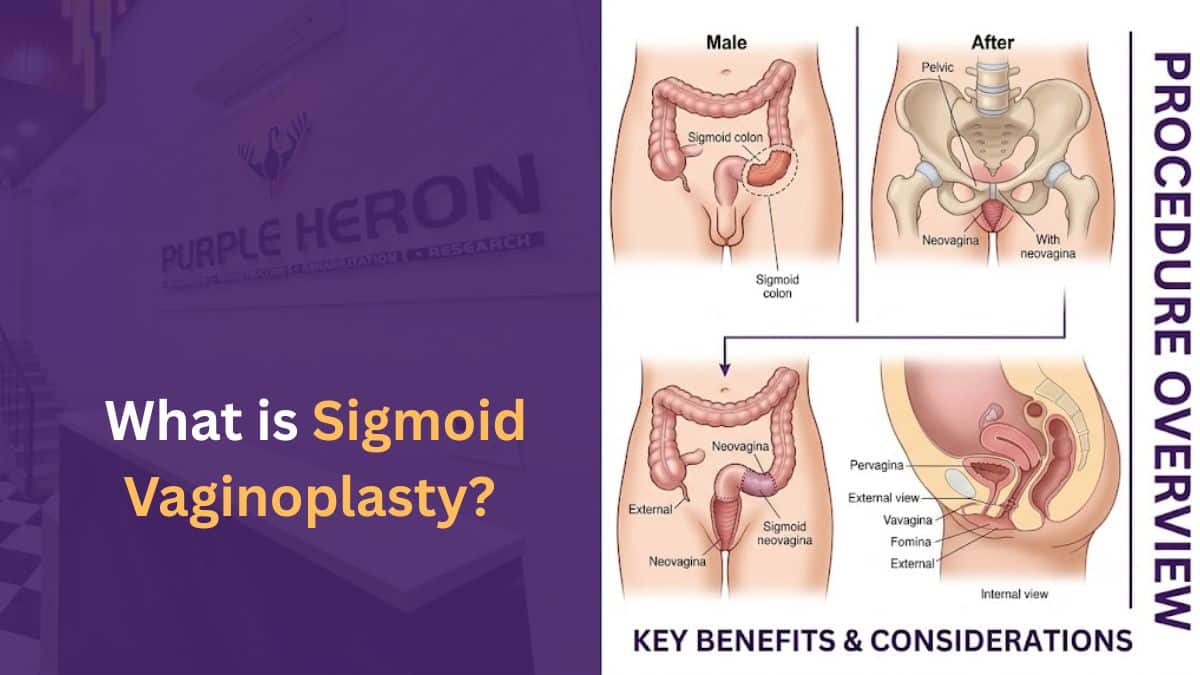
Sigmoid vaginoplasty is a reconstructive surgical procedure that creates or reconstructs a vaginal canal using a segment of the sigmoid colon, which is the lower part of the large intestine. It is one of several techniques used in gender confirmation surgery and may also be performed for certain congenital or acquired conditions requiring vaginal reconstruction.

The procedure involves carefully preparing a section of the sigmoid colon while preserving its blood supply. This tissue is then used to form the neovagina. Because intestinal tissue has natural lubrication, it differs from techniques that rely on skin grafts or penile tissue.

Although sigmoid colon vaginoplasty is an established surgical option, it is not the preferred choice for every patient. The decision depends on several factors, including previous surgeries, available tissue, overall health, and the patient’s goals.

A detailed medical assessment and surgical consultation help determine whether this approach is appropriate.

Why is the Sigmoid Colon Used?

The sigmoid colon has several characteristics that make it useful for vaginal reconstruction in selected patients.

It has a reliable blood supply, flexible tissue, and a structure that can provide sufficient vaginal depth. Because it is intestinal tissue, it naturally produces mucus, which may reduce dryness compared with some other techniques.

Surgeons may recommend colon vaginoplasty when:

  • Penile or scrotal tissue is insufficient.
  • The previous vaginoplasty requires revision.
  • Additional vaginal depth is needed.
  • Individual anatomy makes another technique less suitable.

Using colon tissue also allows surgeons to reconstruct a vaginal canal with durable tissue while preserving adequate circulation.

However, because this operation involves both reconstructive and bowel surgery, it is generally more complex than procedures that do not involve the intestine.

Who May Be a Candidate?

A person’s suitability for sigmoid vaginoplasty surgery depends on a thorough medical evaluation rather than a single factor.

Potential candidates may include:

Candidate Why It May Be Considered
Individuals seeking gender-affirming surgery When clinically appropriate
Patients requiring revision vaginoplasty To improve depth or reconstruct the vaginal canal
People with limited genital tissue Alternative tissue source
Individuals with congenital vaginal absence Vaginal reconstruction
Patients with previous unsuccessful reconstruction Reconstructive option

Before recommending surgery, the healthcare team usually reviews:

  • Medical history
  • Previous surgeries
  • Physical examination
  • Psychological assessment (when applicable)
  • Overall fitness for surgery
  • Patient goals and expectations

Every patient requires an individualized treatment plan.

Who May Not Be a Candidate?

Not everyone is an appropriate candidate for sigmoid vaginoplasty.

The procedure may not be suitable for individuals with:

  • Certain bowel diseases
  • Significant uncontrolled medical conditions
  • Active infections
  • Poor surgical fitness
  • Unrealistic expectations about surgical outcomes

In some cases, another gender-affirming vaginoplasty technique may provide a better balance of risks and benefits.

A qualified surgical team can explain which option best matches the patient’s anatomy and long-term goals.

How Does Sigmoid Vaginoplasty Work?

At a high level, sigmoid vaginoplasty involves using a carefully selected portion of the sigmoid colon to create a new vaginal canal.

The operation is performed under general anesthesia by an experienced surgical team. The surgeon preserves the blood supply to the selected bowel segment before positioning it to form the neovagina.

The remaining bowel is then reconnected so that digestive function can continue normally.

Patients typically undergo several preoperative investigations, including imaging studies and laboratory tests, to ensure the procedure can be performed safely.

Because every patient’s anatomy differs, the exact surgical approach may vary.

What Happens During Surgery?

Although the exact surgical technique varies, the procedure generally includes several major stages.

These may include:

  • Administration of general anesthesia
  • Preparation of the surgical site
  • Careful mobilization of a section of the sigmoid colon
  • Creation of the neovaginal canal
  • Placement of the colon tissue while maintaining its blood supply
  • Reconstruction of the bowel
  • Surgical closure and postoperative monitoring

Patients are closely observed after surgery to ensure healing progresses as expected.

Detailed surgical planning helps minimize complications and supports recovery.

Benefits of Sigmoid Vaginoplasty

Like every reconstructive procedure, sigmoid vaginoplasty has potential advantages for selected patients.

Benefits Table

Potential Benefit Explanation
Adequate vaginal depth Colon tissue may provide sufficient length for reconstruction.
Natural lubrication Intestinal tissue naturally produces mucus.
Reliable blood supply Healthy circulation supports tissue survival.
Useful for revision surgery May be considered after previous vaginoplasty.
Durable tissue Colon tissue is generally resilient when healthy.

Additional potential benefits include:

  • May be appropriate when the penile tissue is limited.
  • Can be an option for complex reconstructive cases.
  • Personalized surgical planning based on patient anatomy.
  • Long-term functional outcomes have been reported in selected patients when performed by experienced surgeons.

It is important to remember that no surgical procedure is without risks, and outcomes vary from person to person.
penile-skin-inversion-vaginoplasty

Risks and Possible Complications

Every surgical procedure carries potential risks, including sigmoid vaginoplasty surgery.

Possible complications may include:

Potential Risk Description
Bleeding May occur during or after surgery
Infection Requires prompt medical attention
Bowel-related complications Because colon tissue is involved
Narrowing of the vaginal canal May require additional treatment
Delayed wound healing Recovery differs between individuals
Scar formation Part of the normal healing process
Need for revision surgery Occasionally required

Choosing an experienced plastic and reconstructive surgeon, following postoperative instructions, and attending follow-up appointments can help reduce the risk of complications.

No surgical technique can guarantee a specific outcome, so discussing both expected benefits and limitations during your surgical consultation is essential.

Recovery Timeline

Recovery after sigmoid vaginoplasty varies from person to person. Factors such as overall health, the complexity of the surgery, adherence to postoperative instructions, and the body’s natural healing response all influence recovery. Regular follow-up appointments allow the surgical team to monitor healing and address any concerns early.

Recovery Timeline

Recovery Phase What to Expect
Week 1 Hospital stay, pain management, limited mobility, close monitoring, and gradual return to light movement.
Weeks 2–4 Swelling and discomfort gradually decrease. Patients continue wound care, avoid strenuous activities, and attend follow-up visits.
Months 2–3 Most daily activities can usually be resumed with the surgeon’s approval. Healing continues internally, and any recommended postoperative care, including dilation when advised, should be followed.
Long-Term Recovery Healing may continue for several months. Regular medical reviews help evaluate long-term outcomes and overall function.

Tips for a Smooth Recovery

  • Follow all postoperative instructions carefully.
  • Attend every scheduled follow-up appointment.
  • Maintain good hygiene to reduce the risk of infection.
  • Eat a balanced diet and stay hydrated to support healing.
  • Avoid smoking unless your healthcare provider has confirmed it is safe to resume, as smoking may delay wound healing.
  • Contact your surgeon promptly if you notice unusual pain, fever, excessive bleeding, or other concerning symptoms.

Long-Term Results

When performed in appropriately selected patients by experienced surgeons, sigmoid vaginoplasty can provide durable long-term reconstructive outcomes. The procedure uses well-vascularized sigmoid colon tissue, which may help maintain vaginal depth and provide natural lubrication.

However, long-term results depend on multiple factors, including:

  • Individual anatomy
  • Surgical technique
  • Postoperative care
  • Compliance with follow-up recommendations
  • Overall health

Patients may require ongoing evaluations to monitor healing and function. In some situations, additional procedures or revision vaginoplasty may be considered if complications develop or further reconstruction is needed.

It is important to have realistic expectations. Every surgical outcome is unique, and no procedure can guarantee identical results for every patient.

Sigmoid Vaginoplasty vs Penile Inversion

Both sigmoid vaginoplasty and penile inversion vaginoplasty are established techniques used in gender-affirming surgery, but they differ in the type of tissue used, surgical complexity, and the situations in which they may be recommended.

Feature Sigmoid Vaginoplasty Penile Inversion Vaginoplasty
Tissue Used Sigmoid colon tissue Penile and scrotal skin
Surgical Complexity More complex, involves bowel surgery Generally less complex
Natural Lubrication Yes, due to intestinal tissue Limited natural lubrication
Vaginal Depth May provide adequate depth, especially in selected cases Depends on available genital tissue
Suitable for Revision Cases Often considered May be limited in some revision cases
Hospital Stay Usually longer Usually shorter
Recovery May require closer monitoring Generally less complex recovery

Neither technique is universally better than the other. The most appropriate option depends on the patient’s anatomy, previous surgeries, medical history, and treatment goals. A comprehensive patient evaluation and surgical consultation are essential before deciding on the most suitable procedure.

About the Medical Reviewer

Dr. Nitesh Lamoria – Director & Founder

Qualifications

  • MBBS
  • MS (General Surgery)
  • M.Ch. (Plastic, Reconstructive & Cosmetic Surgery)
  • Fellowship in Anti-Aging & Regenerative Medicine (IASRM)

Dr. Nitesh Lamoria is a Plastic, Reconstructive, and Cosmetic Surgeon at Purple Heron Hospitals with a strong academic and clinical background in advanced reconstructive procedures. Coming from a family of medical professionals, he developed an early interest in plastic surgery because of its ability to restore both form and function. He completed his M.Ch. in Plastic Surgery from SMS Medical College, Jaipur, and further expanded his expertise through a Fellowship in Anti-Aging & Regenerative Medicine (IASRM).

His approach to patient care emphasizes individualized treatment planning, evidence-based decision-making, and open communication. Dr. Lamoria has pursued advanced training under experienced plastic surgeons and believes that successful reconstructive surgery requires careful assessment, meticulous planning, and a personalized approach tailored to each patient’s unique needs.

In addition to his clinical practice, Dr. Lamoria is committed to adopting modern technologies and continuously refining surgical techniques to enhance patient care. His long-term vision is to contribute to the advancement of reconstructive, microsurgical, cosmetic, and aesthetic surgery by combining innovation with compassionate, patient-centered treatment. His focus remains on helping patients make informed healthcare decisions through ethical practice and high standards of medical care.

Medical Review Disclaimer

This article has been medically reviewed for educational accuracy. The information provided is intended for general educational purposes only and should not replace professional medical advice, diagnosis, or treatment. Every patient has unique medical needs, and treatment decisions should always be made in consultation with a qualified healthcare professional.

Conclusion

Sigmoid vaginoplasty is a specialized form of gender-affirming vaginoplasty and vaginal reconstruction that uses a section of the sigmoid colon to create a neovagina. It may be considered for selected individuals, including some patients undergoing revision vaginoplasty or those with limited tissue available for other reconstructive techniques.

Like all major reconstructive procedures, sigmoid vaginoplasty surgery requires careful planning, thorough medical assessment, and realistic expectations. Understanding how the procedure works, its potential benefits, possible risks, recovery process, and long-term considerations can help patients make informed decisions about their care.

If you are considering gender confirmation surgery or exploring different vaginoplasty techniques, discussing your medical history, goals, and available options with an experienced plastic and reconstructive surgeon is the best way to determine the most appropriate treatment plan for your individual needs.

Frequently Asked Questions

1. What is sigmoid vaginoplasty?

Sigmoid vaginoplasty is a reconstructive procedure that uses a section of the sigmoid colon to create a neovagina. It is used in selected cases of gender-affirming surgery and vaginal reconstruction.

2. Why is the sigmoid colon used?

The sigmoid colon has a reliable blood supply and naturally produces mucus, making it a suitable tissue option for selected reconstructive procedures.

3. Who is a candidate for sigmoid vaginoplasty?

Candidates may include individuals seeking gender-affirming surgery, patients requiring revision vaginoplasty, or people with insufficient genital tissue for other techniques. Final eligibility depends on a comprehensive medical assessment.

4. Is sigmoid vaginoplasty permanent?

The reconstructed vaginal canal is intended to be a long-term reconstruction. However, ongoing medical follow-up and appropriate postoperative care remain important.

5. How long does the surgery take?

The duration varies depending on the complexity of the procedure and whether additional reconstructive steps are required. Your surgeon can provide a more accurate estimate based on your individual case.

6. Is the procedure painful?

Some pain and discomfort are expected after surgery, but these are usually managed with prescribed medications and supportive postoperative care.

7. What are the risks?

Possible risks include bleeding, infection, bowel-related complications, delayed healing, scar formation, narrowing of the vaginal canal, and the potential need for revision surgery.

8. How long is the recovery period?

Initial recovery generally takes several weeks, while complete healing may continue for several months.

9. Does sigmoid vaginoplasty require dilation?

Some patients may be advised to follow a dilation schedule depending on their surgical technique and recovery. The exact recommendations vary and should come from the treating surgeon.

10. Can revision surgery be performed later?

Yes. In certain situations, revision vaginoplasty may be considered to address functional or anatomical concerns.

11. Is sigmoid vaginoplasty better than penile inversion?

Neither procedure is universally superior. The most suitable option depends on the individual’s anatomy, previous surgeries, medical history, and treatment goals.

12. Will bowel function be affected?

In most cases, bowel continuity is restored during surgery. The surgical team evaluates bowel health carefully before recommending the procedure.

13. How long will I stay in the hospital?

The hospital stay varies depending on recovery progress and the complexity of the surgery. Your surgeon will provide personalized guidance.

14. Can everyone undergo sigmoid vaginoplasty?

No. Certain medical conditions, bowel disorders, or other health concerns may make alternative reconstructive options more appropriate.

15. When should I contact my surgeon after surgery?

Seek medical advice promptly if you experience persistent fever, severe pain, excessive bleeding, increasing redness, unusual discharge, or any other concerning symptoms.

Leave a Reply

Your email address will not be published. Required fields are marked *