

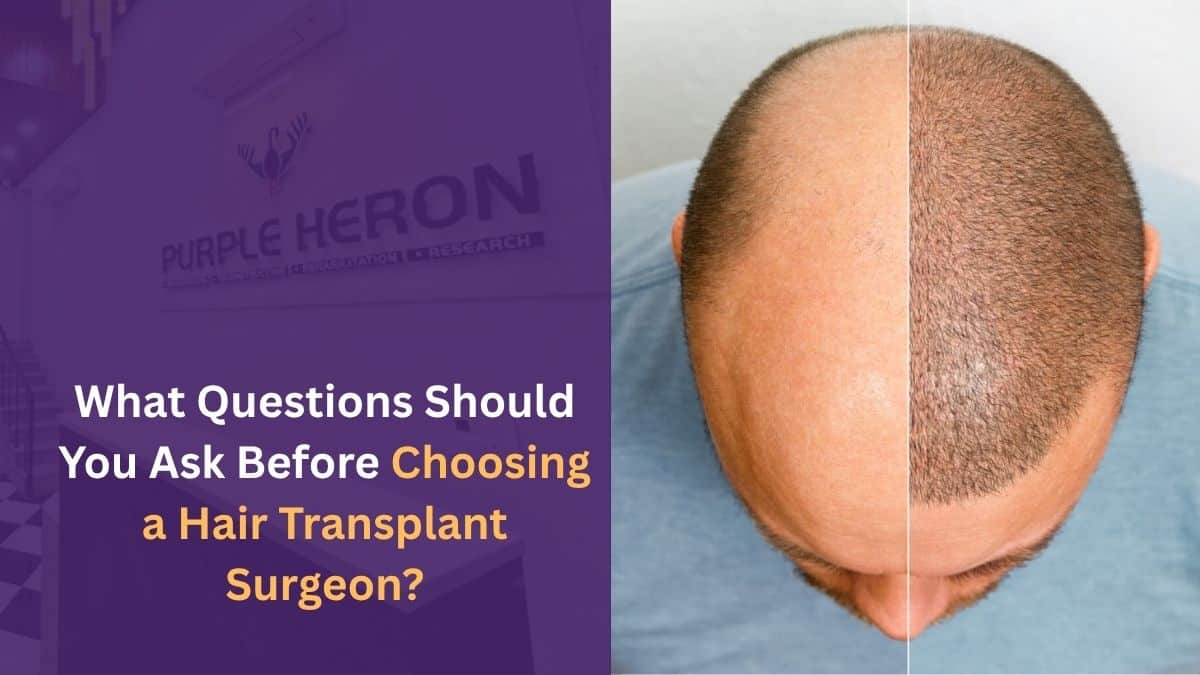
Hair loss can affect your confidence, appearance, and overall self-esteem. Fortunately, advances in hair transplant in India have made it possible to achieve natural, permanent hair restoration. However, the success of your procedure depends largely on choosing the right surgeon.
With so many clinics offering hair transplant surgery in India, how do you know which surgeon is truly qualified? Asking the right questions before your consultation can help you make an informed decision and avoid disappointing results.
In this guide, we’ll discuss the most important questions you should ask before choosing a hair transplant surgeon.
Why Choosing the Right Hair Transplant Surgeon Matters
A hair transplant is much more than moving hair follicles from one area to another. It requires:
- Artistic hairline design
- Proper graft extraction
- Correct graft placement
- Advanced surgical techniques
- Long-term planning for future hair loss
An experienced hair transplant surgeon in India can provide natural-looking, dense, and permanent results while minimizing complications.
1. What Qualifications and Certifications Do You Have?
Your first question should always be about the surgeon’s medical qualifications.
A qualified surgeon should have specialized training in:
- Plastic Surgery
- Cosmetic Surgery
- Reconstructive Surgery
- Hair Restoration Procedures
Don’t hesitate to ask:
- Are you a qualified plastic surgeon?
- How long have you been performing hair transplants?
- Have you received specialized training?
Choosing a board-certified surgeon significantly improves your chances of successful treatment.
2. How Many Hair Transplants Have You Performed?
Experience matters.
Hair transplantation requires precision and artistic skill that improves with years of practice.
Ask questions like:
- How many procedures have you completed?
- How many hair transplant surgeries do you perform every month?
- Have you treated patients with hair loss similar to mine?
An experienced surgeon can easily handle different hair loss patterns and donor area limitations.
3. Which Hair Transplant Technique Do You Recommend?
There are several modern techniques available.
These include:
FUE (Follicular Unit Extraction)
- Minimal scarring
- Faster recovery
- Natural results
FUT (Follicular Unit Transplantation)
- Suitable for larger graft requirements
- Linear scar
- Good graft survival
DHI Hair Transplant
- Direct implantation
- Better control over hair angle
- High precision
Ask your surgeon why one technique is better suited for your specific case rather than choosing the latest trend.
4. Am I a Suitable Candidate for Hair Transplant Surgery?
Not everyone is an ideal candidate.
Your surgeon should carefully evaluate:
- Age
- Hair loss pattern
- Donor hair quality
- Family history
- Scalp condition
- Medical history
A trustworthy surgeon will tell you honestly whether surgery is the right option.
5. How Many Grafts Will I Need?
Every patient has different hair restoration goals.
Ask:
- How many grafts are recommended?
- Why do I need this number?
- Can you show a graft estimate?
Be cautious of clinics that promise an unusually high number of grafts without proper examination.
6. Can I See Before-and-After Photos?
Real patient results speak louder than advertisements.
Request:
- High-resolution before-and-after photos
- Similar hair loss cases
- Different stages of recovery
- Long-term results
Natural hairlines, proper density, and consistent outcomes indicate surgical expertise.
7. Who Will Actually Perform My Surgery?
This is one of the most overlooked questions.
In some clinics:
- Technicians perform most of the procedure.
- The surgeon only supervises briefly.
Ask clearly:
- Who performs graft extraction?
- Who designs my hairline?
- Who implants the grafts?
The surgeon should be actively involved throughout the hair transplant procedure.
8. What Are the Risks and Possible Complications?
Every surgery has risks.
A responsible surgeon should explain possible complications, including:
- Swelling
- Temporary shedding
- Infection
- Scarring
- Poor graft growth
- Uneven density
Transparency builds trust.
9. What Results Can I Realistically Expect?
Avoid clinics promising:
- 100% guaranteed hair growth
- Instant results
- Unlimited density
Hair transplant results usually develop gradually.
Typical timeline:
- 2–4 weeks: Transplanted hairs shed (normal).
- 3–4 months: New hair begins growing.
- 6–8 months: Noticeable improvement.
- 12–15 months: Final results become visible.
An ethical surgeon will set realistic expectations.
10. What Is Included in the Cost?
Hair transplant cost in India varies depending on:
- Number of grafts
- Technique used
- Surgeon experience
- Hospital facilities
Ask whether the package includes:
- Consultation
- Blood tests
- Surgery
- Medications
- PRP sessions (if recommended)
- Follow-up visits
Understanding the full cost helps avoid hidden charges.
11. What Is the Recovery Process Like?
Recovery instructions directly impact your final results.
Ask about:
- Hair washing instructions
- Sleeping position
- Exercise restrictions
- Office return timeline
- Sun exposure
- Smoking and alcohol precautions
Proper aftercare improves graft survival.
12. Will I Need Future Hair Transplants?
Hair loss often continues with age.
A skilled surgeon plans for future hair loss by:
- Preserving donor hair
- Designing an age-appropriate hairline
- Recommending medications if necessary
Long-term planning ensures your results continue to look natural.
13. Do You Recommend Additional Hair Loss Treatments?
Hair transplantation may be combined with treatments such as:
- PRP therapy
- Medications for hair loss
- Scalp care
- Nutritional support
These treatments may help maintain existing hair and improve overall results.
14. What Is Your Success Rate?
Instead of asking for guarantees, ask:
- What percentage of grafts usually survive?
- How satisfied are your patients?
- Do you have patient testimonials?
A reputable hair transplant clinic in India should be transparent about expected outcomes.
15. How Do You Design a Natural Hairline?
Hairline design is one of the most important aspects of a successful hair transplant.
Ask your surgeon:
- How will my hairline be customized?
- Will it match my facial features?
- How do you ensure it looks natural as I age?
A well-designed hairline should complement your face and provide a youthful yet realistic appearance.
Red Flags to Watch Out For
Avoid clinics that:
- Promise guaranteed results
- Offer unrealistically low prices
- Perform surgeries without proper consultation
- Allow technicians to handle most of the procedure
- Cannot provide authentic patient results
- Rush you into booking surgery
- Ignore your long-term hair loss pattern
Tips for Choosing the Best Hair Transplant Surgeon in India
Before making your final decision:
- Verify the surgeon’s qualifications.
- Review genuine patient testimonials.
- Examine before-and-after results.
- Discuss all available treatment options.
- Understand the recovery process.
- Choose experience and expertise over low cost.
- Ensure the surgeon personally performs critical steps of the procedure.
Why India Is a Preferred Destination for Hair Transplant
India has become a leading destination for hair restoration due to:
- Highly qualified surgeons
- Advanced FUE and DHI technology
- Affordable treatment compared to many countries
- International standards of patient care
- Excellent success rates
- Comprehensive follow-up services
Patients from across India and around the world choose experienced specialists for high-quality, natural-looking outcomes.
Dr. Nitesh Lamoria – Leading Hair Transplant Surgeon in India
Dr. Nitesh Lamoria is the Director & Founder of Purple Heron Hospital and a renowned expert in plastic, reconstructive, and cosmetic surgery. With years of advanced surgical experience and specialized expertise in hair transplant in India, he is committed to delivering natural-looking, precision-based results tailored to each patient’s unique needs.
Qualifications
- MBBS
- MS (General Surgery)
- M.Ch (Plastic, Reconstructive & Cosmetic Surgery)
- Fellowship in Regenerative Medicine
Professional Highlights
- Trained at SMS Medical College, Jaipur
- International exposure and advanced training with globally recognized plastic surgeons
- Special focus on AI-driven patient analysis and precision-based surgical planning
- Expertise in FUE hair transplant, DHI hair transplant, reconstructive surgery, and aesthetic enhancements
At Purple Heron Hospital, Dr. Nitesh Lamoria combines advanced technology, surgical precision, and personalized care to help patients achieve safe, natural, and long-lasting hair restoration outcomes.
Final Thoughts
Choosing the right surgeon is the most important step in your hair restoration journey. Asking detailed questions during your consultation helps you understand the surgeon’s expertise, the procedure, expected results, and long-term care.
Whether you’re considering hair transplant in India, FUE hair transplant, or DHI hair transplant, prioritize experience, transparency, personalized treatment planning, and patient safety over promotional offers. A skilled surgeon can help you achieve natural-looking, long-lasting results that restore both your hair and your confidence.
